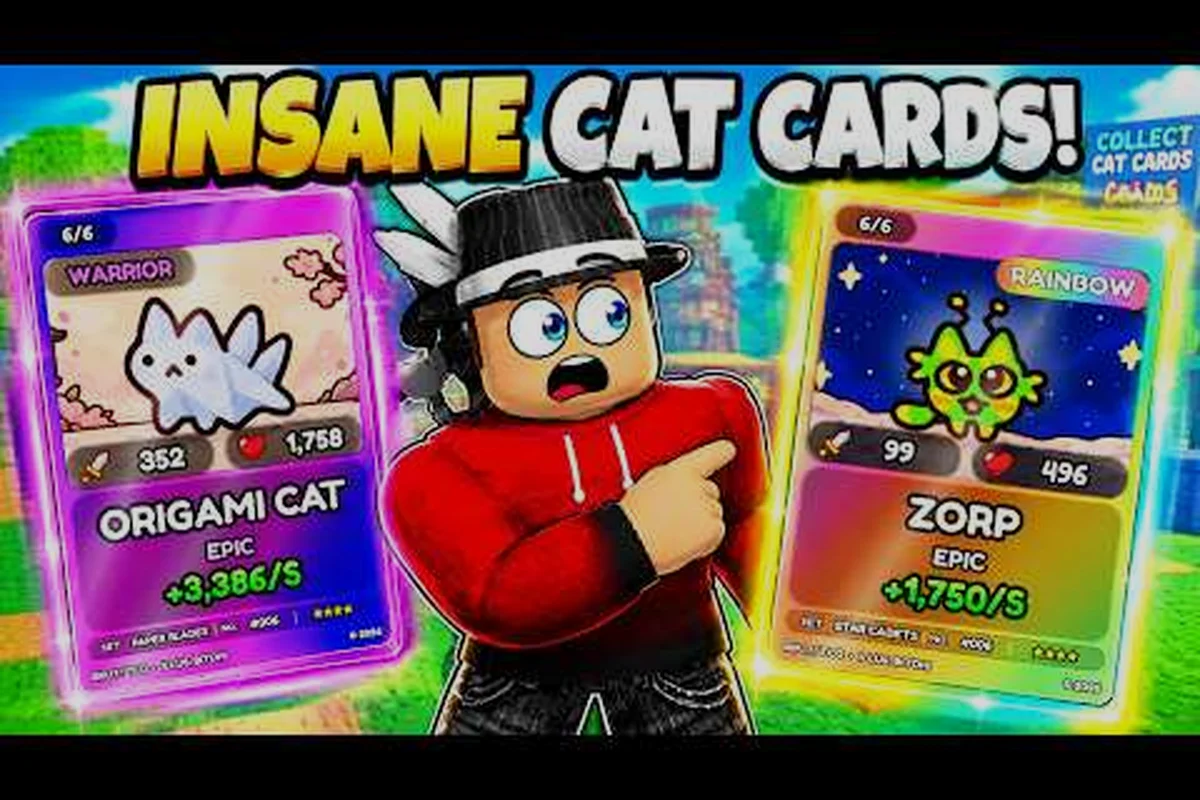
Collect Cat Cards fans favorite cats become much easier to choose when rarity, artwork, and collector appeal are compared side by side. This breakdown highlights popular cat cards, adorable picks, and the traits that shape the growing Index.
Collect Cat Cards Fans Favorite Cats: What Makes a Card Beloved?
A favorite cat card can win for three different reasons: an appealing design, a memorable cat, or a rarity that feels worth pursuing. That makes the subject of Collect Cat Cards fans favorite cats more personal than a simple tier ranking, because the best choice depends on what a collector values most.
The distinction matters when comparing the regular card set with rare variants. Some players enjoy the clean look of a standard card, while others treat holographic, rainbow, gold, or legendary versions as the true targets. Community videos and player showcases are especially useful for spotting which cats repeatedly appear in favorite-card displays.
| Collector style | Most valued trait | Best use for this guide |
|---|---|---|
| Art enthusiast | Background and character details | Finding standout designs |
| Completionist | Unlocked rarity and Index coverage | Planning future collection goals |
| Completionist | Rarity order and set completion | Tracking missing cards |
| Community favorite | Popularity among other collectors | Identifying broadly admired cards |
| Completionist | Set completion and final checklist | Comparing the full catalog |
| New player | Clear rarity labels and simple goals | Building a manageable first collection |
This is where the Collect Cat Cards card tiers guide becomes useful. A tier list can organize the chase, but it should not pretend that rarity, appearance, and popularity always agree. A lower-rarity card may remain a community favorite because its artwork or personality feels especially memorable.
Separate popularity from objective value
Popularity is best treated as community-reported rather than a fixed mechanical statistic. The long-form Collect Cat Cards collection video by AccelToWin demonstrates a practical approach: open packs, reinvest the early rewards, and track which cats appear as the Index fills out. Player favorites often emerge from repeated exposure rather than a single guaranteed pull.
That distinction keeps the Collect Cat Cards tcg angle realistic. Trading-card collectors commonly evaluate condition, scarcity, presentation, and provenance, but this game centers on collecting digital cats and completing its Index. There is no verified market price in the supplied sources, so card popularity should not be presented as monetary value.
Scoring Favorites for Personal Taste
Collectors can rate each card with a lightweight score instead of forcing every favorite into one universal ranking. Award three points for rarity, three for artwork, two for character appeal, and one for usefulness in a personal showcase. The resulting score creates a consistent comparison while leaving room for taste.
| Criterion | Weight | Example question |
|---|---|---|
| Rarity | 3 points | How uncommon is the variant? |
| Artwork | 3 points | Would the card stand out on a profile? |
| Character appeal | 2 points | Does the cat feel memorable? |
| Personal connection | 1 point | Does it represent a favorite moment? |
| Collection value | 1 point | Does it fill a meaningful gap? |
The score is not an official game ranking. It is a collector decision tool that helps explain why one card may belong among Collect Cat Cards fans favorite cats while another remains preferable for completion.
Collect Cat Cards Popular Cat Cards by Rarity
Popularity becomes clearer when cards are separated by rarity, because players often compare different versions of the same cat. A standard version may have broad appeal, while a special treatment attracts collectors who care about the final image in their Index.
The supplied community video shows progression through repeated pack openings and reinvestment rather than a verified drop-rate chart. Based on that player experience, treat rarity labels as the confirmed organizing system and treat claims about which cat is “most popular” as community favorites instead of official rankings.
| Rarity group | What collectors notice | Popularity signal |
|---|---|---|
| Common | Familiar cat and simple presentation | Frequently seen across broad collections |
| Uncommon | A noticeable visual upgrade | Often chosen as an early upgrade target |
| Rare | Stronger artwork or standout effect | Repeatedly appears in player showcases |
| Legendary | Distinctive treatment and prestige | Frequently treated as a priority pull |
| Gold | Premium metallic presentation | Attracts completion-focused collectors |
| Rainbow | Bright, multi-color finish | Popular for visual variety |
| Holo | Reflective or holographic finish | Appeals to finish-focused collectors |
Why special finishes attract attention
Finish-focused collectors often choose between the strongest visible treatment and the rarer named variant. If the catalog treats gold, rainbow, and holo as separate entries, a player can appreciate the colorful impact of one finish while still keeping the rarer named card as a separate objective. The catalog of cat cards, gold cards, and rainbow variants provides a useful reference when comparing those categories.
This framework supports a more honest Collect Cat Cards all rarities explained section. Each tier can answer a different collection need: common cards establish the set, rare cards improve visual identity, and premium finishes add scarcity. None of those roles is automatically less valid than another.
Community favorites versus guaranteed targets
A favorite cat is not necessarily the easiest target. The community video’s reinvestment pattern suggests that sustained opening and tracking can gradually reveal the Index, but it does not establish guaranteed results for any named cat. Players should therefore separate two goals: finding the cats that excite them and completing the set without avoidable gaps.
For example, a player may value a legendary cat more than a rainbow version because the cat itself represents a favorite design. Another collector might reverse that decision because a rainbow finish completes a particular category. These are different goals, and the better choice depends on the collection rather than a universal ranking.
Collect Cat Cards Cute Cats List by Visual Appeal
Cute cat cards tend to score well because their visual language communicates quickly: rounded shapes, bright expressions, playful poses, and colorful backgrounds. These qualities make them particularly attractive to new collectors who want an Index that feels cheerful before they fully understand every rarity and progression rule.
A useful Collect Cat Cards cute cats list should explain the appeal instead of presenting unsupported popularity percentages. Group cards by visual features, then identify the versions that combine those features with a more dramatic finish. That gives buyers and players a way to find a favorite even when they cannot compare complete artwork screens.
| Visual category | Distinctive features | Collector appeal |
|---|---|---|
| Round-faced cats | Soft features and large expressions | Immediate charm and readability |
| Playful cats | Active poses and humorous interaction | Strong personality and scene energy |
| Colorful cats | Bright fur and saturated backgrounds | Eye-catching display value |
| Sleepy cats | Calm expressions and relaxed poses | Cute, cozy visual mood |
| Fancy cats | Elegant outfits or presentation | Premium showcase character |
| Mischievous cats | Expressive or exaggerated body language | Memorable personality and humor |
Choose by personality, not just finish
The best-looking card is not automatically the one with the rarest treatment. Some cards have simpler art that remains readable at small sizes, while others rely on dense backgrounds that reward a closer look. If a card will be displayed as a profile image, readability may matter more than spectacle; if it completes a set, the catalog status may matter more.
Collectors who care deeply about presentation can compare the guide to the best-looking cards, backgrounds, and ultra-rare designs. For names, artwork details, and visual categories, that reference also makes it easier to explain why a cat becomes a fan favorite rather than merely a high-rarity pull.
A shortlist built for personal taste
Start with three categories: the cat you would choose as an avatar, the cat whose art you would print, and the cat you would most want to complete the set. Compare the variants for each. This produces a practical cute cats list based on distinct reasons to like them instead of collapsing every preference into one arbitrary ranking.
| Personal goal | What to prioritize | Best shortlist method |
|---|---|---|
| Display standout | Bold color and readable silhouette | Compare multiple backgrounds |
| Character affection | Expression and personality | Pick favorite pose first |
| Set completion | Missing card number or rarity | Filter by collection gaps |
| Trading-card display | Finish and card presentation | Compare special variants |
| Future-proof collection | Variety across categories | Balance favorites by rarity |
Collect Cat Cards Card Tiers Guide for Collectors
A useful card tier system should describe what a card brings to a collection rather than announce that every card has one fixed combat role. In Collect Cat Cards, the important questions include rarity, visual finish, catalog completion, and personal attachment. Those qualities create a tier framework that works for both casual Index completion and careful trading-card displays.
| Practical tier | Typical characteristics | Best reason to prioritize it |
|---|---|---|
| S Tier | Favorite design plus standout rarity | Strong visual and collection centerpiece |
| A Tier | Highly appealing card with a special finish | Excellent display or upgrade target |
| B Tier | Attractive card with solid rarity | Reliable addition to a themed Index |
| C Tier | Pleasant design or familiar rarity | Useful early and completion-focused picks |
| D Tier | Less distinctive design or common rarity | Worth collecting when completing the set |
This Collect Cat Cards card tiers guide is subjective by design. S Tier should not be read as official value, and D Tier should not mean a card lacks value for a completionist. The table is most accurate when it compares cards within the same goal, such as favorite artwork, newest Index additions, or the most visually consistent set.
Rank three separate collections
Instead of ranking every card once, maintain three shortlists. The display list favors striking art and premium finishes, the completion list tracks every missing entry, and the personality list holds the cats with the strongest emotional appeal. This method captures why Collect Cat Cards fans favorite cats can differ from any single objective ranking.
The card-number and trading-card collection guide can help with gaps, numbering, and catalog tracking. Once the lists are separated, a favorite becomes easier to evaluate: it might rank A Tier for display, C Tier for rarity, and S Tier for character appeal.
Avoid duplicate reasoning
A card should not receive three bonus points simply because it is common. Its common rarity may make it easier to complete, while a legendary version may be rarer but harder to obtain. Judge each card against a clear target, and document the reason so later rankings do not drift when another attractive pull arrives.
| Reason to rank | Evidence to record | Weak reasoning to avoid |
|---|---|---|
| Rarity | Named rarity or special finish | “It feels lucky” |
| Artwork | Background, pose, and color | “It looks newer” |
| Completion | Missing number or category | “It appears in many videos” |
| Character | Personal attachment | “Everyone must like it” |
| Variety | Distinct role in the Index | “It resembles another card” |
Structuring a Showcase Around Finished Artwork
A satisfying collection display needs structure. Arrange cards by rarity, favorite characters, or finished artwork rather than opening the entire collection in one dense row. The result feels more intentional and makes it easier for another collector to understand why a particular card belongs among the Collect Cat Cards fans favorite cats.
The community playthrough linked earlier is also a useful workflow reference. It shows a collector reinvesting early cash into additional pack openings while the Index gradually fills. Whether or not a player follows that exact budget strategy, the presentation principle is sound: prioritize targeted progress and avoid letting one memorable pull obscure the rest of the set.
| Showcase format | Best for | Organization method |
|---|---|---|
| Rarity wall | Demonstrating progression | Group from common to premium finishes |
| Cat personalities | Sharing character favorites | Arrange by mood or behavior |
| Artwork gallery | Highlighting backgrounds | Lead with the strongest visual pairings |
| Number sequence | Showing completion progress | Arrange by printed card number |
| Themed rows | Featuring one visual style | Combine related colors and poses |
| Favorites spotlight | Presenting standout cards | Add a short reason for every choice |
Give every favorite a reason
A one-word label such as “cute” is not enough to make a showcase memorable. Add one detail about the expression, background, finish, or moment when the card was obtained. These details make the collection personal and provide useful context if the display is shared with another player.
Collectors can also use the completionist guide to Index progress, paw tiers, towers, and achievements when their display is intended to show more than cards. That broader context explains why a rare pull can represent a milestone rather than merely another digital image.
Keep the balance visible
A collection made entirely of premium variants can look impressive but may not communicate steady progress. A balanced showcase places favorites beside common cards that completed early sets or helped form the collection’s theme. The result demonstrates both reach and taste, which is more convincing than rarity alone.
Choosing Collect Cat Cards Fans Favorite Cats for Every Goal
The strongest final choice depends on the goal. Choose a premium finish for visual impact, a common card for efficient completion, and a favorite character for emotional appeal. Comparing the same cat across versions also reveals whether rarity, art, or collection value deserves priority in your particular Index.
| Goal | First choice | Secondary comparison |
|---|---|---|
| Fast catalog progress | Common or readily obtained entry | Number and rarity coverage |
| Premium display | Rare or special finish | Background and readability |
| Character spotlight | Favorite cat design | Which variant looks best |
| Balanced Index | Mix of standard and premium cards | Theme consistency |
| Completion challenge | Missing uncommon or rare entry | Specific collection gap |
A four-step selection method
First, identify the purpose of the card. Next, record its rarity and finish. Compare the artwork against other entries in the same category. Finally, check whether it fills a catalog gap or represents a genuine personal favorite. This process produces a choice that can withstand both sentimental and practical evaluation.
The same method works when comparing the Collect Cat Cards popular cat cards shared by players. Popularity can narrow the field, but the final decision should still reflect the collector’s own goal. A widely admired card is a useful shortlist entry, not a substitute for evaluating the card in your own collection.
Make the catalog the final checklist
The broader complete card list and numbered entries can serve as the final audit after a ranking session. Check that every cat is represented, every relevant finish is accounted for, and no memorable card was overlooked because it had an unexpectedly common rarity.
Frequently Asked Questions
What makes a card one of the best Collect Cat Cards fans favorite cats?
A favorite usually combines a memorable cat design with visual polish and a rarity that feels meaningful to the collector. Popularity can help identify admired cards, but the strongest choice also depends on whether the card completes a set, suits a display, or represents a cat the player genuinely enjoys.
Which rarity is considered the best in Collect Cat Cards?
The best rarity depends on the goal, because gold, rainbow, holo, legendary, and other named tiers each provide a different collection benefit. Premium finishes usually stand out visually, while lower rarities can be more practical for completing an Index. Compare cards within the same category instead of assuming one tier is always superior.
Are the popular Collect Cat Cards cute cats list rankings official?
No. The rankings reflect community favorites and visual appeal rather than verified game statistics. Community videos and player showcases can reveal recurring favorites, but they do not establish official popularity percentages, guaranteed drop rates, or a definitive best-cat ranking.
Should collectors keep every special version of the same cat?
Keeping each version is ideal for a completion-focused collection because special finishes may occupy separate Index entries. If space or inventory matters, compare rarity, artwork, and catalog gaps first. A premium version may be the stronger display pick, while the standard card may be enough for a themed collection.
How do I choose the best Collect Cat Cards TCG-style showcase?
Choose a clear structure, such as rarity order, card numbers, personality groups, or artwork pairings. Give each highlighted card a brief reason and balance premium finishes with common cards that show progression. This creates a display that communicates both rarity and the collector’s individual taste.