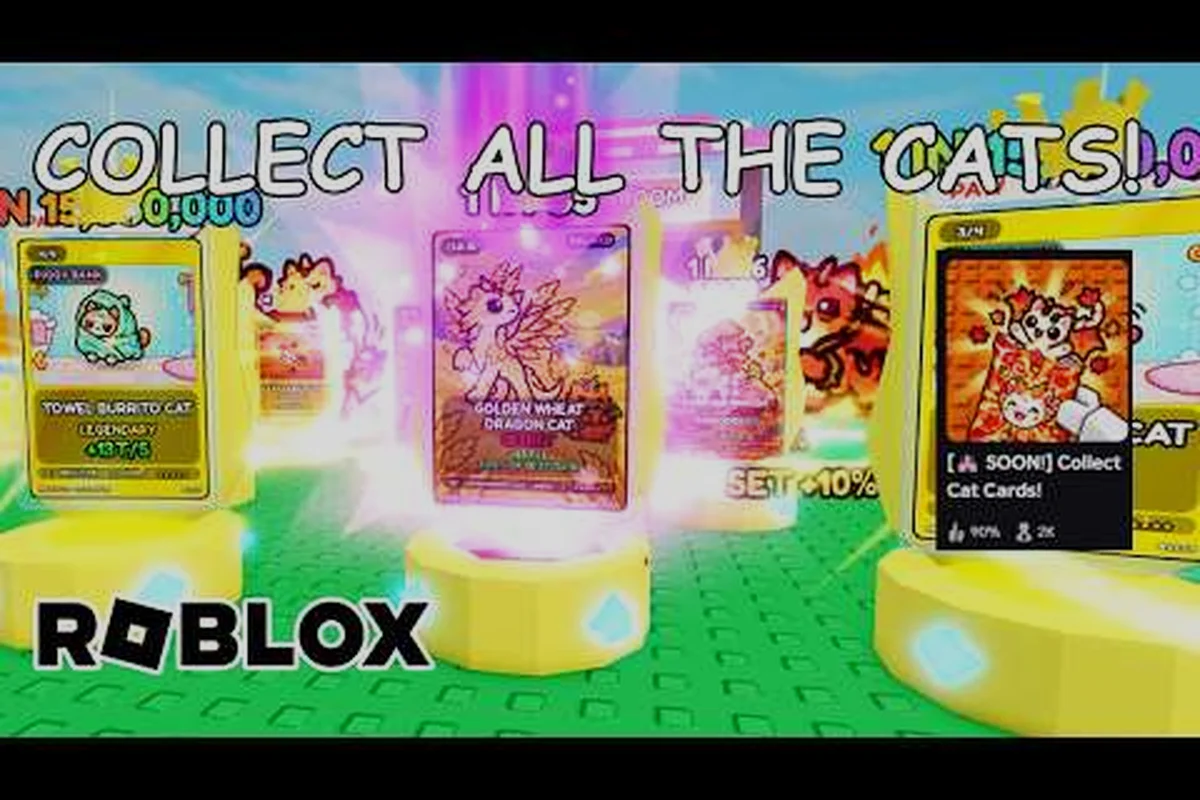
Collect Cat Cards how to progress fast starts with the core loop: earn money from stands, open packs at the right moment, and reinvest each gain into upgrades that raise your next income round. This guide covers the fast-progression order, best settings, and pack strategy that help you reach Gold, Rainbow, and Holo cards without stalling your economy.
Collect Cat Cards Fast Progression Overview
Fast progression in Collect Cat Cards depends on earning a reliable pack supply, making every stand upgrade count, and reinvesting before chasing rare pulls. This progression guide explains how to balance those priorities without relying on unverified drop-rate claims.
The core loop is simple: collect money, upgrade productive stands, open packs, and improve the cards that increase your next round of income. The best way to play is not to spend every available coin immediately; instead, reserve enough for upgrades that permanently raise cash generation.
The Fast Progression Spenders Sequence
Use this sequence to keep your account moving: prioritize the cheapest upgrade that measurably raises stand income, then reopen packs as soon as the available currency supports a meaningful opening. This avoids stalling while preserving reserve funds; for example, improving one low-tier stand that currently earns 1,000 per cycle is generally more useful than saving for a premium stand that would delay the next pack. Track the income change and pack count after each purchase so reinvestment remains based on results rather than guesswork.
-
Generate income: Collect money from active stands and automate the easiest repeatable production.
-
Upgrade strategically: Improve the stands that produce money or accelerate pack access.
-
Open packs on schedule: Spend earned currency on packs instead of waiting for a large lump sum.
-
Review the result: Keep useful upgrades, sell duplicates when appropriate, and avoid chasing one rare card indefinitely.
-
Reinvest: Put surplus income back into stands, card value, or pack production.
| Priority | Early-game action | Why it accelerates progress |
|---|---|---|
| 1 | Keep every stand producing | Raises the income available for upgrades |
| 2 | Buy the cheapest meaningful upgrade | Creates returns without exhausting reserves |
| 3 | Open packs regularly | Finds value earlier instead of losing momentum |
| 4 | Upgrade best owned cards | Strengthens the account without requiring luck |
| 5 | Chase one target card | Limits inefficient spending across many rarities |
This loop matters because progression is cumulative. A modest stand improvement can fund more packs, better packs can improve card value, and stronger cards can support further production gains. New players can review the beginner guide for Collect Cat Cards before applying this more advanced routine.
Collect Cat Cards Best Settings and Mobile Setup
Before starting a progression run, test the layout by opening the Cat Cards inventory, pack-opening screen, and card-detail view on the device you will actually use. Keep the screen awake, raise the display brightness, and use a stable connection so a missed tap does not interrupt pack openings or sorting. Although exact menu labels may vary by platform or game version, prioritize large touch targets, visible confirmation prompts, and controls that do not overlap system gestures.
For players using a phone, this mobile guide focuses on the practical setup that matters: readable text, comfortable stand access, and controls that do not conflict with common system gestures. For desktop, the same principle applies, but additional screen space can make comparison and sorting easier.
Recommended Device Setup
| Setting or control | Recommended approach | Practical result |
|---|---|---|
| Display scale | Increase slightly if labels are small | Makes stand and reward states easier to read |
| Orientation | Landscape for wider screens; upright for short play sessions | Uses available space without covering key controls |
| Control layout | Place money, pack, and stand buttons near one thumb | Reduces repeated repositioning |
| Notifications | Disable interruptions during active income checks | Prevents missed collection windows |
| Performance mode | Use a stable frame-rate setting | Makes menus and taps more consistent |
Controls Guide Checklist
Before optimizing income, verify each control in a fresh save or after returning to the main play area: tap Collect once, wait for the stand to register, then confirm the income counter and card inventory update. This catches delayed inputs or an obscured target before you spend time farming. Test Pack and Upgrade next, since a mis-tapped purchase can consume currency without producing the expected card or upgrade. On mobile, repeat the sequence after rotating the device, as touch placement can shift with the interface scale; check that the Quick collect action still selects every intended stand and that Menu access opens card details without interrupting production.
-
Collect button: Repeated tapping should reliably register against the intended stand.
-
Pack button: Confirm that the pack-opening animation does not hide the next available action.
-
Upgrade button: Make sure the purchase panel clearly shows the price and resulting change.
-
Quick collect: If the game provides one, use it to gather income from several stands efficiently.
-
Menu access: Ensure settings, inventory, and card details can be opened without leaving the main play area.
Players on mobile can test the layout for one full production cycle. If the controls feel cramped, rotate the device or enlarge interface elements before changing any unrelated device settings. Exact performance effects can vary by platform, so community-reported settings should be treated as practical observations rather than guaranteed frame-rate promises.
Collect Cat Cards Pack Pull Strategy
Packs are the main progression checkpoint, but opening them faster does not automatically create stronger progress. Timing matters because each pack pull can reveal cards that improve production, duplicate useful cards, or provide sellable value. A measured routine produces better results than an impatient burst.
Before Opening a Pack
Before opening a pack, check your current cash, the next planned stand upgrade, and the account objective that is lagging most. If the next upgrade needs 10,000 Cash and you have 12,000, keep the reserve intact and buy only packs that fit the remaining 2,000 without sacrificing future upgrades. Comparing the stand cost, available Cash, and current income before each pull prevents one impulsive pack purchase from delaying a stronger stand, while a specific target such as income or a collectible makes every card easier to evaluate.
-
Reserve first: Keep enough money for the next planned stand upgrade.
-
Review targets: Decide whether you need income, pack speed, card value, or a specific collectible.
-
Avoid sunk-cost spending: If you cannot afford another pack after this one, open only what your reserve permits.
This method reduces the temptation to spend the entire balance. It also makes each pull easier to evaluate because you know which part of the account needs improvement. For more on creating a sustainable economy, see the guide to making money with stands and kibble.
Pack Decision Matrix
| Current goal | Better decision | Why |
|---|---|---|
| Raise cash per second | Prioritize income cards and stand upgrades | Raises the ceiling for future purchases |
| Increase pack frequency | Invest in pack-speed production | Creates more opportunities without needing constant manual spending |
| Build a showcase | Choose the target rarity you need | Prevents scattered spending across every rarity tier |
| Recover spending room | Sell the least useful duplicates | Converts inventory into upgrade currency |
| Chase a chase card | Continue only with a fixed budget | Limits losses from repeated misses |
Gold, Rainbow, and Holo cards can be exciting targets, but a rare pull does not automatically produce the highest return. Compare the card with the cards you already own, then ask whether it improves your production chain. A common card that raises stand output may be more valuable early than a prestige collectible that does not strengthen the economy.
How Often Should You Open Packs?
Open packs when a regular batch has accumulated, rather than whenever the smallest possible balance appears. Batching reduces attention switching, while reinvesting part of every batch prevents unopened rewards from becoming a stagnant resource. The exact numbers depend on your available currencies and current upgrades, which may vary by game version.
For example, if one batch generates 30,000 coins, split it into roughly 15,000 coins for upgrades, 10,000 for packs, and 5,000 as a reserve. Adjust those portions as production upgrades change, but keep the reserve large enough to fund another pack cycle before spending it.
-
Upgrade portion: Spend on the strongest available production improvement.
-
Pack portion: Open a controlled batch to gain cards and improve collection progress.
-
Reserve portion: Hold enough to protect the next cycle from an empty balance.
This budget prevents cash starvation, where every coin is spent immediately and the player cannot afford the next pack or stand upgrade. It also makes progress measurable because you compare three outcomes after each cycle: higher income, more cards, and a larger remaining reserve.
Stand Upgrades and Cash Reinvestment Order
Stands are the foundation of fast progression because they determine how much currency enters the system. An upgrade is valuable when it improves output, reduces collection effort, or helps produce another resource needed for packs. A visible rank increase with little practical impact should not outrank a smaller upgrade that solves a real bottleneck.
Identify Your Bottleneck
| Symptom | Likely bottleneck | Best reinvestment direction |
|---|---|---|
| You tap collect often but earn slowly | Weak stand output | Buy a direct income upgrade |
| You have money but few packs | Pack production or currency conversion | Improve pack access and selling flow |
| You open many packs but lack cash | Insufficient reinvestment | Prioritize stands before more pulls |
| Inventory is full of low-value cards | Excess duplicates | Sell extras and free progression space |
| Progress stops after a specific unlock | Missing card or stand requirement | Focus on the exact dependency |
The best way to play around this bottleneck is to complete one upgrade before moving to the next category. Single-bottleneck focus reduces waste because each purchase has a clear purpose. If you are still learning the basic loop, the comprehensive beginner roadmap can help you identify which systems to unlock first.
A Practical Reinvestment Order
-
Direct income: Increase the stand producing the largest share of your money.
-
Collection efficiency: Reduce the number of repeated taps needed for the same payout.
-
Pack production: Increase the number of packs you can open during a session.
-
Card value: Improve the contribution of owned cards if your account supports that upgrade path.
-
Premium targets: Pursue Gold, Rainbow, Holo, mutation, or grading goals only after the core economy remains stable.
This order is intentionally conservative. It may look less exciting than immediately opening another pack, but it creates a larger budget for the next round. The paw grading guide is useful when a card condition or reward quality matters to your collection targets, although grading should follow basic production stability rather than replace it.
Collect Cat Cards How to Progress Fast Without Overspending
The fastest sustainable route is controlled reinvestment, not spending the largest balance in one session. This guide’s progression method keeps a portion of every reward cycle available for upgrades and uses pack results as a source of both collection progress and future economic strength.
Daily Session Plan
A focused session can produce meaningful gains without endless tapping: a 5–10 minute run should prioritize one production cycle, a single upgrade, and one pack batch, while a 15–30 minute run gives you time to compare each card’s production, duplicate, and collection value. This structure matters because every purchase interrupts income generation; upgrading the stand with the lowest output can raise future earnings more than repeatedly opening packs for a rare card you cannot use.
-
Start with collection: Gather all available income and note which stand produced the most.
-
Make one upgrade: Apply the saved money to the current bottleneck.
-
Open a pack batch: Review each new card for production value, duplicate value, and collection value.
-
Sell selectively: Keep cards that contribute to your goal and sell the rest if that currency funds upgrades.
-
Reserve for later: End with enough money to maintain the next cycle.
| Session length | Recommended focus | Avoid |
|---|---|---|
| 5–10 minutes | Collect, upgrade, and open one batch | Buying every visible upgrade |
| 15–30 minutes | Complete a production cycle and review cards | Chasing multiple rare targets |
| Longer session | Optimize stands and compare collection progress | Spending without a category budget |
Progress Mistakes That Stall Your Balance
Spending every coin is tempting because the shop screen gives immediate feedback, but an empty balance can stop the production cycle. Treat the final purchase as a checkpoint: if the remaining coins cannot cover the next planned pack batch or a needed production upgrade, pause before buying. For example, keep a reserve equal to one expected pack cost rather than spending down to zero; this protects income generation and prevents a single unlucky card pull from forcing a long wait.
Chasing several rarities at once spreads attention and budget across targets that compete for the same money. Pick one primary target, set a spending limit, and delay rare-card pulls until the production upgrades needed to fund more pack batches are complete. For example, if a new-rarity card costs roughly three standard pack pulls, compare that price with three pulls of your main target instead; after completing the target or reaching its spending cap, restore normal upgrade spending.
Ignoring card value can make a collection look stronger without improving the account. Compare each new card with the best owned production cards. Use the plot expansion overview if passive cash generation is the part of your setup that needs improvement.
Upgrading without a plan often produces scattered benefits that strengthen one part of the account while leaving another bottleneck untouched. Before buying, write down the exact problem—slow passive cash, too few pack openings, or an unaffordable production tier—then select the upgrade that directly raises that output. For example, if each pack batch takes too long to repay its cost, compare the batch’s expected return with the upgrade’s passive-income gain and finish the faster-payback option first. Recheck the decision after every completed pack batch, since new cards and accumulated coins can change the best upgrade priority.
| Mistake | Correction |
|---|---|
| Opening every affordable pack | Divide income among upgrades, packs, and reserves |
| Keeping every duplicate | Keep only cards that help the active goal |
| Buying the largest rank increase | Compare the practical economic effect |
| Ending with zero funds | Preserve the next upgrade or pack batch |
| Treating one rare card as a full account | Pair collectible goals with steady production |
Collect Cat Cards Advanced Optimization Priorities
Once income, upgrades, and pack pulls form a stable loop, advanced optimization becomes safer. The goal is to reduce idle time and make better decisions, not to add complexity to every session. Players should improve one bottleneck at a time and verify that the change produces a measurable benefit.
Optimization Priority List
-
Income consistency: Favor upgrades that increase dependable output over uncertain bonuses.
-
Inventory quality: Sell cards that duplicate your collection plan or have no economic role.
-
Pack timing: Open batches when your reserve can still support the next upgrade.
-
Target focus: Concentrate on one desired rarity or mutation rather than buying random value across several tracks.
-
Presentation clarity: Keep menus organized so prices, card states, and production changes remain easy to compare.
Mutation effects can influence which cards deserve attention, although exact conditions and availability should be checked against the current version. The mutation and weather reference provides the right place to investigate those interactions before committing a large budget.
Progress Milestones
| Milestone | What to measure | Healthy sign |
|---|---|---|
| First major stand upgrade | Money before and after collection | Higher income without exhausting reserves |
| First controlled pack batch | Cards kept, sold, and saved | Collection improves while the economy grows |
| Stable reinvestment cycle | Funds remaining after each session | You can afford the next planned purchase |
| Target-card pursuit | Total spent versus collection goal | Spending remains within a fixed limit |
| Long-term efficiency | Fewer taps or actions per payout | Progression no longer depends on constant input |
Measure results over several sessions rather than one lucky pull. A single Gold, Rainbow, or Holo result can distort your judgment, while repeated cycles reveal whether your stands and reinvestment plan are working. Keep the cash reserve rule, revisit your target only after the economy is stable, and change one upgrade at a time.
Frequently Asked Questions
What is the fastest way to progress in Collect Cat Cards?
The fastest sustainable approach is to upgrade productive stands first, preserve a cash reserve, and open packs in controlled batches. Reinvesting in income or pack production makes later purchases easier, while targeted spending helps you finish a collection goal without diverting funds into every rarity at once.
Should I spend all my money on packs?
No, because spending the entire balance can leave you unable to afford your next pack or the stand upgrade that increases future income. Keep a reserve, spend part of each income cycle on upgrades, and use another part for packs. This preserves momentum even when a recent pull does not produce the card you wanted.
What is the best setup for playing on mobile?
Prioritize readable text, unobstructed buttons, and controls that are comfortable to reach with one thumb. Test the layout by collecting income and opening a pack before committing to a long session. Interface details may vary by platform, but stable performance and easy access to your stands matter more than elaborate graphics options.
How do I know which upgrade to buy first?
Choose the upgrade that fixes your current bottleneck. If income is low, prioritize direct stand output; if packs are too scarce, improve pack production; if inventory is crowded, sell unneeded duplicates. One upgrade at a time makes it easier to confirm whether your balance and collection are actually improving.
Should I chase rare cards or build stronger stands?
Do both in a controlled order. Strong stands create the currency needed for sustained card hunting, while rare cards may complete your collection or provide useful bonuses. Save a defined budget for a specific target, but return to production upgrades whenever the reserve becomes too thin to support the next cycle.