
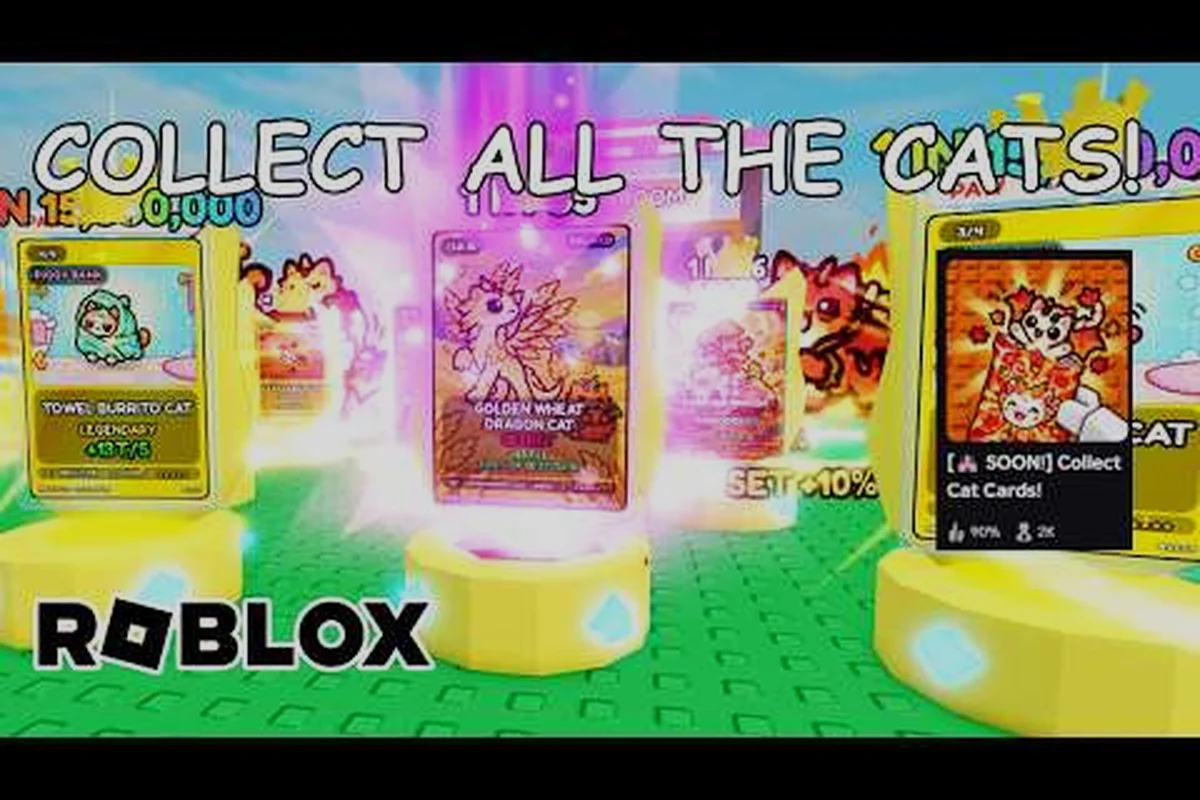
Collect Cat Cards weather mutations turn ordinary cat cards into rare display pieces, but their effects are easy to misunderstand. This collect cat cards mutation guide explains how Shocked, Cosmic, and Aurora cats differ, what players should check, and how to improve the odds of finding special cards.
What Weather Mutations Look Like on Cards
Collect Cat Cards weather mutations are visual and elemental variations that can appear on eligible cat cards. They make a normal card more distinctive, yet finding one is not guaranteed. Weather conditions, eligible cat pools, card rolls, and random mutation rolls determine which combinations can appear in a collection.
The important distinction is that a weather mutation is not simply a different cat. It is an additional property attached to a card, so two cards with the same species can still have different mutation states. Mutation identity comes from the combined card and effect, which makes duplicates worth checking before you assume you already own one.
| Mutation feature | What it changes | What it does not change |
|---|---|---|
| Weather effect | The card's visual presentation | The base cat species |
| Eligible pool | Which cats can receive the effect | Your inventory capacity |
| Mutation roll | Whether the effect appears at all | The card's normal collection value |
| Card state | The final combination in your collection | Other cards you already own |
This distinction also explains why a mutation guide should focus on observable results rather than unsupported drop-rate claims. The available community references do not provide a verified universal percentage for weather mutations, so exact odds should be treated cautiously and may differ by platform or game version.
Mutation Eligibility
Not every cat card is a valid target for every weather effect. The practical process starts with checking whether the card or its source allows a weather mutation. A limited cat, a starter cat, and a card obtained through a specific activity may have different availability rules even when they belong to the same overall collection.
Players commonly confuse card availability with mutation availability. A cat being obtainable does not automatically mean every weather effect can be applied to it. Likewise, seeing a glowing effect on one cat does not prove that the same effect can appear on every species.
The complete mutation reference is useful for checking which cards and effects belong together. Use it as a collection checklist, then confirm the final result in your inventory rather than relying on memory.
Visual Identification
Weather mutations are usually recognized by their effects, colors, and animation details, but the mutation marker on the card itself remains the strongest confirmation. For example, a card with electrical styling may be Shocked, while a cosmic card can combine space-like coloring with celestial detailing to create a distinctive Cosmic effect. Lighting, rarity, or a special card frame can make a normal card look unusual, so verify the marker in the card information panel before classifying it as a weather mutation.
| Effect | Visual cues to verify | Common source of confusion |
|---|---|---|
| Shocked | Electrical styling and a charged appearance | Static-themed artwork without the mutation tag |
| Cosmic | Space-like coloring and celestial detailing | Generic glowing or holographic treatment |
| Aurora | Flowing green, blue, or purple tones | Holographic cards that shift color |
| Golden | Bright metallic treatment | Sunlit or rare-card frames |
Check the card information panel whenever a visual is ambiguous, especially when metallic edges, rainbow reflections, or animated effects could be mistaken for a mutation. For example, a Golden card may resemble a sunlit card frame, while an Aurora card can look holographic at thumbnail size. The collection tracker is more reliable because it records the mutation tag even when a card’s Shocked, Cosmic, or Aurora effect appears subtle.
How the Three Headline Effects Differ
The three headline weather effects differ in presentation, collection identity, and the conditions under which they are discussed. Shocked emphasizes electrical energy, Cosmic suggests a celestial theme, and Aurora produces a flowing, iridescent look. Their names are easy to remember, but rarity should not be inferred from color alone.
Community reports often use the term rare mutation broadly, covering visually impressive effects without providing controlled sample counts. That distinction matters when comparing Shocked Cat, Cosmic Cat, and Aurora Cat: a dramatic electrical, celestial, or flowing-band appearance can make a card seem rarer than a standard card, even though no confirmed drop-rate data supports a ranked scarcity claim. Treat these as special mutation categories, record several unobfuscated Shocked, Cosmic, and Aurora pulls in a collection tracker, and compare their frequency before assigning precise rarity.
| Mutation | Signature look | Best collection appeal | Rarity claim |
|---|---|---|---|
| Shocked Cat | Electric energy and sharp contrast | Strong with energetic or lightning-themed cards | Rare is commonly reported; exact odds unverified |
| Cosmic Cat | Deep space colors and star-like detail | Ideal for celestial, void, or magical cats | Rare is commonly reported; exact odds unverified |
| Aurora Cat | Flowing bands of luminous color | Especially striking on elegant or magical cats | Rare is commonly reported; exact odds unverified |
| Standard card | Normal card presentation | Useful for completing the base roster | Commonly available relative to mutations |
The Shocked Cat
A Collect Cat Cards shocked cat is identified by an electrical treatment that should remain visible in the inventory and collection views. The effect stands apart from ordinary animated backgrounds because it changes the card's mutation identity rather than simply adding movement.
The Shocked visual state can be easy to recognize on darker card art and less obvious on cards with bright highlights. If you are searching manually, compare the card with a normal copy whenever possible. A second copy is useful evidence: two cards of the same species should not be treated as equivalent if one has the mutation and the other does not.
The Cosmic Cat
The Collect Cat Cards cosmic cat combines a space-themed look with the underlying species of the card. Its strongest visual feature is the celestial treatment, although the exact hue and animation can vary with the card frame. That makes Cosmic cards more distinct than ordinary rarity effects.
For a compact reference to Cosmic and other unusual variations, compare it with the mutation collection overview. The key takeaway is that Cosmic status should be recorded independently from the species, because collecting every cat does not automatically complete every Cosmic variant.
The Aurora Cat
The Collect Cat Cards aurora cat uses luminous, flowing colors to create a polished collectible appearance. Because holographic and rainbow effects may also use bright color shifts, Aurora needs careful identification. Look for a stable mutation label or a consistent effect pattern rather than judging a single frame.
The Aurora effect is especially attractive on cats with light or fantasy-themed artwork, although eligibility is determined by the game's rules rather than visual suitability. Players should record the exact card name and mutation instead of labeling every colorful card as Aurora.
Getting More Consistent Mutation Results
There is no reliable method for manually choosing a weather mutation during a normal roll. The practical goal is to improve efficiency: use eligible sources, avoid skipping useful notifications, inspect duplicates carefully, and record results consistently. This collect cat cards how to get mutations approach focuses on repeatable habits rather than false promises about direct control.
A Reliable Collection Routine
Use a short inspection routine after each meaningful card-opening session, especially when testing drops from different sources. For example, if a batch includes duplicate cards, compare their species, weather mutation labels, and source entries before closing the inventory. This prevents a rare weather effect from being mistaken for an ordinary duplicate and makes later mutation tracking easier without repeatedly sorting a large collection.
-
Open or claim the card source and wait until the animation finishes.
-
Check the card details for an explicit weather mutation label.
-
Compare duplicates to confirm that the effect is attached to the card.
-
Record the result using species, mutation, and source.
-
Repeat from the same source type and record both successes and failures.
| Collection habit | Why it helps | Common mistake |
|---|---|---|
| Check the details panel | Confirms the effect beyond its color | Assuming every glow is a mutation |
| Track duplicate pairs | Separates species rarity from mutation rarity | Treating two identical base cards as complete |
| Log the source | Reveals which activity produces useful results | Changing sources without recording samples |
| Inspect inventory immediately | Reduces missed discoveries | Sorting only by species name |
| Record failures | Prevents selective memory of rare drops | Counting only confirmed mutations |
Use Source Diversity Carefully
Different card sources can expose different eligible cats. Spending every attempt in one place may still be efficient if that source contains your target species, but rotating sources can improve coverage when the pools vary. The useful comparison is not simply “more rolls” but “more rolls from a pool that can contain the card you need.”
Eligible-source coverage is the most reliable optimization. If Cosmic does not appear on a particular cat in your collection, finding another copy of that same cat will not solve the issue. Target the species first, then check whether the card can receive the weather effect you want.
A player's log can be extremely valuable here because it separates source-specific patterns from a misleading impression of the global drop rate. For example, recording ten successful Cosmic cards from one source is more informative than remembering that Cosmic “feels common,” especially when the collection includes both regular and shuffled versions. Note the cat species, source, card version, and whether each result was Cosmic, Shocked, Aurora, or another weather mutation; that lets you compare coverage across pools and prioritize sources that actually produce the mutations you still need.
Avoid Display Problems
The fastest way to lose a mutation is to miss it during a quick opening. Slow down when the card reveal includes an unusual color shift, particles, or movement. A brief visual pause can prevent an expensive oversight, particularly when the new card is immediately followed by another reward.
Keep notifications enabled, use the inventory filter when available, and avoid selling or trading a card before confirming its full state. The mutation rarity guide explains why base rarity and mutation rarity should be tracked separately.
A Three-Layer Weather Mutation Catalog
Collectors often want a single place to record every weather-related state they have found. The practical catalog has three layers: the base cat, the applied weather effect, and the source that produced it. Tracking all three makes missing combinations easier to identify and prevents duplicate progress from being counted twice.
Create a Completion Matrix
A matrix works better than a long unstructured list because each cell represents one exact base-cat and mutation combination, making it easier to spot gaps without confusing weather mutations with missing species. For example, one row can track Example Cat A across Standard, Shocked, Cosmic, and Aurora, while another tracks Example Cat B; this preserves the distinction between an unmutated card that is Found and a card that is Missing. Because Shocked, Cosmic, and Aurora are separate weather mutations, each should be verified against the card’s displayed details before its cell is marked Found.
| Base cat | Standard | Shocked | Cosmic | Aurora |
|---|---|---|---|---|
| Example Cat A | Found | Missing | Found | Missing |
| Example Cat B | Found | Found | Missing | Missing |
| Example Cat C | Missing | Missing | Missing | Missing |
| Example Cat D | Found | Missing | Missing | Found |
Use the actual roster from the card collection, then verify each cell against the card’s displayed details: a base cat without a weather mutation should occupy only its Standard cell, while Shocked, Cosmic, and Aurora variants require their own confirmation. For example, if Example Cat A’s card displays Shocked but shows neither Cosmic nor Aurora, record Standard as Found, Shocked as Found, and the remaining two mutations as Missing rather than treating the entire species as incomplete.
Separate Collection Goals
A card can satisfy a base collection while leaving several mutation goals incomplete. Decide whether your main objective is species coverage, one weather effect, or a full combination. Focused collection goals reduce duplicate pulls because each new source can be evaluated against a specific checklist.
| Goal | Completion rule | Best tracking method |
|---|---|---|
| Base collection | One normal version of each eligible cat | Species checklist |
| Effect collection | At least one Shocked, Cosmic, and Aurora card | Mutation checklist |
| Combination collection | Every eligible species paired with every possible weather effect | Grid or matrix |
| Duplicate comparison | Normal and mutated versions of the same species | Pair table |
For broader effects, including Golden, Rainbow, and Holo categories, the special mutation overview provides a useful second checklist. For example, if your target is a complete Shocked, Cosmic, and Aurora set, record each weather mutation separately before adding Golden, Rainbow, or Holo rows; this prevents a visually striking card from being mistaken for progress on every weather slot and makes the remaining eligible species-and-effect combinations easier to identify.
Verify Before Marking Progress
Use three checks before adding a card to the catalog: the card name matches the intended species, the mutation label is visible, and the card has not already been logged. This process also catches accidental normal-card substitution, a common problem when several similar base designs have nearly identical artwork.
Do not infer that a weather mutation is available merely because community reports mention it for another cat. Reports of Shocked Cat, Cosmic Cat, or Aurora Cat can help identify mutation targets, but the current game interface remains authoritative for confirming a card’s actual state. Check the card’s displayed mutation label against the intended species and base artwork, because a normal card may resemble a mutation visually. If the label is missing, treat the card as unverified rather than logging it as a confirmed weather mutation, since catalog accuracy matters more than matching an unconfirmed community claim.
Practical Weather Mutation Checklist
Before ending a session, use a short checklist to confirm that every valuable weather mutation result was inspected. The audit does not change the underlying odds of cosmic cat, aurora cat, or shocked cat rolls, but it protects completed rolls from being overlooked: a rare card may look ordinary at a glance, yet its animated appearance, unusual brightness, or mismatched effect can identify the mutation before it remains untracked in the inventory.
- Review every newly received card in the inventory.
- Open the details panel for unusually bright or animated cards.
- Compare duplicate cards for matching species and differing effects.
- Save at least one ordinary copy when a mutation appears.
- Update the species and mutation catalog.
- Record the source, roll number, and result.
- Check whether the source can produce additional target species.
- Keep unverified cards separate until their effects are confirmed.
The session audit is most valuable after a rare drop, because a card can enter the inventory without being recognized as a distinct cosmic cat, aurora cat, or shocked cat result. For example, an aurora cat whose glow resembles the screen lighting may be dismissed as an ordinary copy, leaving its mutation untracked. Reviewing the inventory before closing the game catches that discrepancy, while comparing duplicate cards confirms whether the species and weather effect actually differ. This prevents a confirmed mutation from being counted as merely another copy—or disappearing from the collection altogether.
Organize by Priority
Not every missing combination deserves equal effort. Start with effects you most enjoy, then focus on species that can appear in repeatable sources. If the goal is a visually balanced collection, spread the effort across Shocked, Cosmic, and Aurora rather than chasing one category indefinitely.
| Priority | Target | Reason |
|---|---|---|
| First | Eligible species from a frequent source | Creates more opportunities for multiple effects |
| Second | Preferred weather effect | Aligns pulls with the main collection theme |
| Third | Difficult species combinations | Requires deeper source coverage |
| Last | Cosmetic duplicates with no checklist value | Produces limited collection progress |
This prioritization also helps when resources are limited: record each missed target as a future goal, then return to the source with the best species coverage rather than opening cards at random. For example, if one repeatable source can produce several eligible species, prioritize it for Shocked, Cosmic, or Aurora cards before chasing a rare mutation from a less reliable source. This approach reduces duplicate pulls, improves the odds of completing difficult species combinations, and keeps progress focused on checklist gaps rather than cosmetic duplicates.
Frequently Asked Questions
Can every cat card receive a weather mutation?
No. Eligibility depends on the specific card and the game's rules. A species may have a normal version without every weather effect available. Verify the details panel after obtaining it, and use the mutation list to identify known combinations rather than assuming every cat shares the same possibilities.
How do players identify a Cosmic Cat?
Look for the Cosmic label in the card details, then confirm the celestial coloring and particle treatment. The Collect Cat Cards cosmic cat is not merely a bright card, because holographic, rainbow, and normal rare frames can also look luminous. Keeping the species and mutation in separate catalog columns helps prevent mix-ups.
Is the Aurora Cat rarer than the Shocked Cat?
There is not enough verified public data to establish a reliable numerical ranking between the effects. Players report both as rare and visually distinctive, but appearance is not evidence of a specific drop rate. Track your own results by source and card pool, since your sample may provide better guidance than unsupported universal percentages.
Do duplicate cards increase mutation chances?
Duplicate cards do not automatically guarantee that the next copy will be mutated. Each copy is an independent result unless the source explicitly states otherwise. Duplicates remain useful because they let you compare a normal version with a mutated version and can complete separate base and mutation checklist entries.
What is the best way to track all mutations?
Use a grid with one row for each cat species and separate columns for the weather effects, including Shocked, Cosmic, and Aurora. Add the card source as another field in your notes. This approach reveals missing combinations and prevents a normal card from being mistaken for a completed mutation entry.